



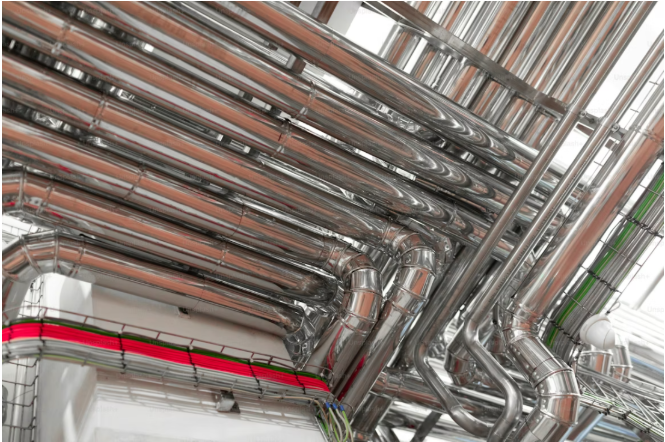
Integrated Elevator & HVAC Engineering
Across Pakistan’s urban development landscape, commercial real estate is evolving rapidly under pressure from rising energy costs, increasing tenant expectations, and stricter operational efficiency requirements.
Cities like Karachi, Lahore, and Islamabad are experiencing a steady rise in high-rise commercial developments, where vertical transportation and climate control systems are becoming core cost and performance drivers rather than secondary utilities.
In many mid-to-large commercial towers in Pakistan, elevators and HVAC systems together account for a significant share of total building energy consumption. At the same time, unstable grid conditions and peak tariff volatility continue to push developers toward smarter, integrated building systems rather than traditional silo-based engineering.
This whitepaper explores how synchronized elevator systems (SWORD Lift architecture) combined with intelligent HVAC networks and integrated civil-electrical design can improve efficiency, reduce lifecycle costs, and enhance occupant comfort in Pakistan’s commercial infrastructure market.
The Stack Effect: A Critical Challenge in Pakistan’s High-Rise Climate
In Pakistan’s hot climate zones, especially cities like Karachi and Multan where summer temperatures regularly exceed 42°C, the Stack Effect becomes more aggressive due to higher thermal gradients between interior and exterior environments.
Elevator shafts behave as vertical thermal channels. As elevator cabins move between floors, they displace large volumes of air while generating additional heat through traction motors and braking systems.
Without coordinated HVAC integration, this heat migrates into corridors, lobbies, and service zones, forcing HVAC systems to operate at near-maximum capacity during daytime peaks.
Case Study: Commercial High-Rise HVAC & Elevator Failure in Islamabad
A well-documented operational issue occurred in a recently developed commercial tower in Islamabad’s Blue Area, a zone known for high-density office occupancy.
The building was constructed using a multi-vendor execution model, where elevator systems, HVAC systems, and electrical infrastructure were designed independently.
Thermal Overload
Elevator drive systems experienced thermal overload conditions during peak summer operations.
Lift Shutdowns
Multiple lift units stopped mid-operation due to safety protection triggers.
Operational Losses
Tenant disruption, emergency retrofits, and significant downtime costs followed.
Integrated Infrastructure Logic
Technical Advantages of Integrated Elevator + HVAC Systems
1. Regenerative Energy Recovery
Regenerative drive systems convert braking energy back into usable electrical power, reducing elevator-related energy consumption by approximately 20%–35%.
2. Microclimate Stability Across Vertical Transit
Synchronizing airflow management with shaft ventilation helps maintain temperature consistency between floors and improves occupant comfort.
3. Predictive Maintenance
Continuous monitoring of motors, guide rails, compressors, and electrical systems enables early fault detection and significantly reduces downtime.
Foundational Synergy: Civil & Electrical Engineering
Civil and electrical integration remains one of the weakest execution points in Pakistan’s construction sector, particularly in fast-track commercial developments.
Elevator shaft alignment, vibration isolation, reinforced structural design, harmonic filtering, MDB balancing, and dedicated feeder lines all play critical roles in long-term performance.
Buildings using BACnet-enabled integrated automation systems have demonstrated measurable energy optimization benefits while reducing simultaneous peak loads.
Implementation Strategy for Pakistani Commercial Projects
BIM-Based Coordination
Early-stage BIM coordination can reduce rework and project delays by up to 25%.
Machine-Room-Less Elevators
MRL systems are increasingly preferred due to lower heat generation and reduced space requirements.
Unified Maintenance Contracts
Integrated SLA-based maintenance strategies reduce vendor conflicts and operational inefficiencies.
Industry Perspective
“In Pakistan’s commercial construction market, infrastructure integration is no longer a premium feature—it is becoming a baseline requirement. Integrated engineering is now directly linked with asset valuation and tenant retention.”
Engineering the Intelligent Commercial High-Rise in Pakistan
Pakistan’s commercial infrastructure sector is transitioning toward smarter, energy-optimized, and automation-driven building ecosystems.
Elevators are evolving into energy-recovering transport systems, HVAC networks are becoming predictive climate platforms, and civil-electrical engineering is shifting toward unified digital design frameworks.
Together, these changes are redefining how commercial buildings operate across Pakistan’s major cities.
Build Smarter Commercial Infrastructure
Partner with GOAT Engineering for BIM-based design, intelligent HVAC integration, advanced elevator systems, and long-term operational excellence.