



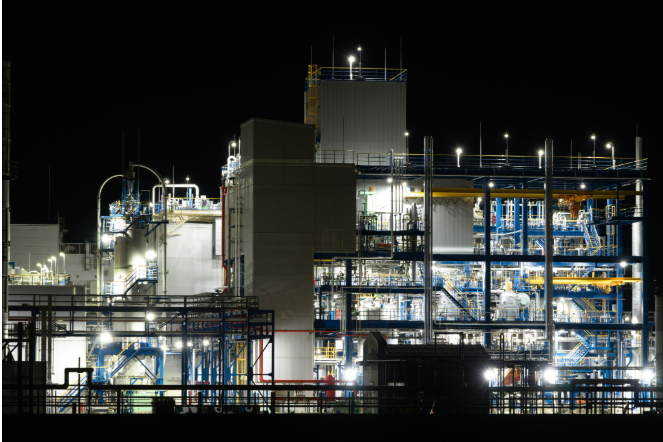
Grid Resilience & Thermal Recovery
Industrial growth across Pakistan’s major manufacturing corridors, including Karachi’s industrial zones, Lahore’s manufacturing clusters, and Faisalabad’s textile hubs, continues to face a critical challenge: severe municipal grid instability combined with rapidly increasing industrial electricity tariffs.
For high-output sectors such as textiles, pharmaceuticals, cement, and fast-moving consumer goods (FMCG), power reliability is directly linked to operational continuity. An unplanned voltage dip or sudden blackout does far more than pause production; it can damage expensive machinery, destroy sensitive raw material batches, and disrupt international export commitments.
To protect operating margins and maintain competitiveness in global markets, forward-looking industrial developers are moving away from passive grid dependence. Instead, they are adopting integrated infrastructure ecosystems that combine decentralized power generation solutions, advanced civil and electrical engineering, and high-efficiency Green HVAC thermal recovery systems.
The True Cost of Grid Vulnerability: An Industrial Risk Analysis
The gap between national energy supply and industrial demand has created an increasingly volatile operating environment. Facilities that rely solely on the national grid without advanced onsite mitigation face three major operational risks.
Catastrophic Production Losses
Even a one-second power interruption can destroy entire production batches, requiring extensive line purging and resulting in major financial losses.
Escalating Operational Expenditure (OPEX)
Dependence on conventional backup diesel generators during peak load-shedding periods significantly increases fuel consumption and production costs.
Loss of Global Supplier Credibility
Manufacturers affected by recurring energy disruptions often face shipment delays, cancelled contracts, and long-term reputational damage.
Power Continuity Architecture
The Factory Floor Reality: The Risks of Poor Infrastructure Design
The importance of unified electrical engineering became evident during a severe operational incident at an industrial processing facility in Hub, Balochistan.
Although the plant had installed a high-capacity backup generator, it relied on an uncertified contractor to modify its internal electrical switchgear system.
During an unexpected municipal grid failure, the manual changeover mechanism failed to isolate the circuits correctly. A reverse-current surge back-fed directly into the plant’s primary motor control center, triggering an electrical fire that destroyed three production lines and forced a 14-day shutdown.
The resulting multi-million-rupee loss demonstrated a critical reality: industrial power generation cannot be treated as a collection of isolated components. It must be engineered as a fully integrated and structurally secure system.
Next-Generation Power Generation Strategies
1. Synchronized High-Capacity Diesel & Gas Generators
Modern facilities deploy synchronized generator clusters controlled by intelligent digital management systems that automatically match real-time facility demand while optimizing fuel efficiency.
2. High-Yield Industrial Solar PV Arrays
Hybrid solar-diesel architectures allow facilities to utilize solar energy for daytime operational loads while minimizing grid dependence and fuel consumption.
3. Combined Heat and Power (CHP) Co-Generation Systems
CHP technology recovers thermal energy from engine exhaust and converts it into process steam or cooling capacity through advanced waste heat recovery systems.
The Engineering Foundation: Civil & Electrical Integration
A power generation system is only as reliable as the civil and electrical infrastructure supporting it. High-capacity generators and industrial transformers create complex engineering demands that require precise structural and electrical integration.
Reinforced concrete inertia foundations, anti-vibration mounting systems, acoustic shielding structures, advanced switchgear, ACBs, bus couplers, and intelligent MCCs all contribute to long-term operational resilience.
Environmental containment systems including exhaust silencers, protected fuel lines, and weatherproof acoustic canopies ensure regulatory compliance and worker safety.
Thermal Optimization: Pairing Power with Green HVAC
True energy resilience is not only about generating power efficiently—it is also about reducing the facility’s total electrical load profile.
Modern facilities deploy Variable Refrigerant Flow (VRF) systems alongside Energy Recovery Ventilators (ERVs), utilizing conditioned exhaust air to pre-cool incoming fresh air streams.
Industry Perspective
“Many industrial asset managers make the mistake of selecting energy infrastructure based solely on the lowest upfront equipment cost. A properly optimized hybrid energy infrastructure can recover its investment premium within 36 months through reduced fuel consumption and minimized production downtime.”
Powering Pakistan’s Industrial Future
As Pakistan’s national energy landscape continues evolving under changing tariff structures and grid pressures, independent energy control has become essential for manufacturers seeking long-term operational security.
At GOAT Engineering, we bring a trusted multi-generational legacy of infrastructure excellence built upon the foundations established by Riaz & Sons.
Our in-house engineering teams provide complete turnkey capabilities, managing the full project lifecycle—from energy audits and advanced 3D BIM electrical mapping to structural civil works and complete system commissioning.
Secure Your Facility’s Energy Independence
Partner with GOAT Engineering to optimize operational costs, improve resilience, and build a future-ready industrial environment.